
My Role
UX Design
Design Systems
Product Managing
Front-End Dev ManagingQA
Team Members
4 Product Managers
1 Senior UX Designer
External Engineering & QA
Tools Used
FigmaConfluence, Jira
Timeline
4 years and on-going
Challenges
🚩 Fragmented user experienceInconsistent templates and UI patterns across 40+ localized sites created usability gaps and weakened MCM’s global brand presence.
🚩 Scalability and performance challengesHeavy custom code and slowed performance and made new feature rollouts and innovation difficultto execute.
🚩 Operational inefficienciesThe lack of systemized design-to-development process led to inconsistent builds, prolonged QA cycles, and repeated onboarding efforts.
Approach & Execution
✅ Scaling Page Builder Automation with Salesforce Page Designer
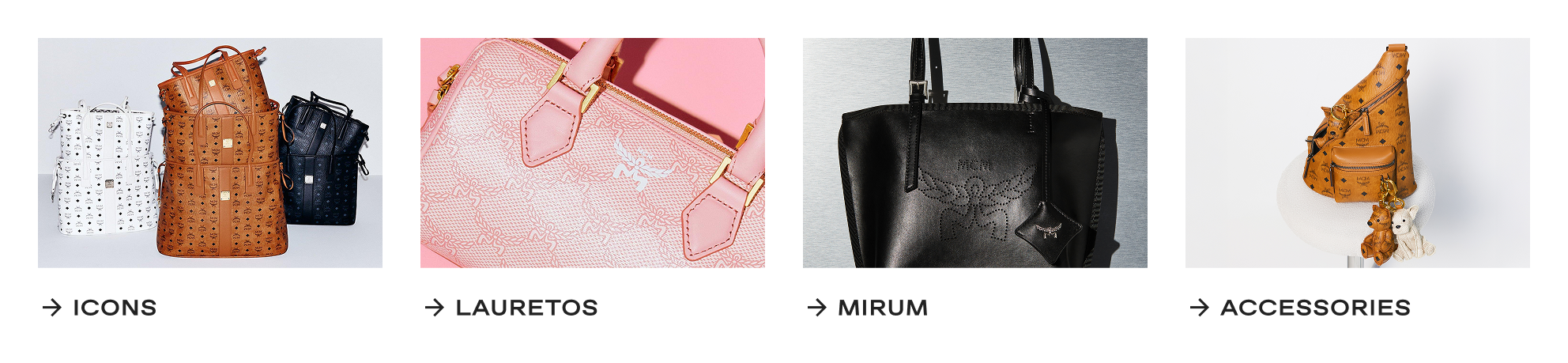
In collaboration with product managers and business team, we introduced and expanded Salesforce Page Designer, a drag-and-drop page-building tool within Salesforce Commerce Cloud.
I translated design into a scalable architecture, partnering with engineers to define structure and reusable patterns. I documented UX requirements, validated builds, and performed QA to support a library of components for faster, consistent localized campaigns.By gathering feedback from global content managers and from internal QA sessions, I was able to identify usability issues and friction points and prioritize iterations.

This Page Designer interface example highlights the technical and business logic behind each component.
I collaborated with developers to define configurable fields like layout, and media settings, enabling teams to build pages that met UX standards and campaign goals without extra development hours.
During this collaboration, I made sure to include feedback from content managers so components felt intuitive and worked seamlessly in their daily publishing workflows.
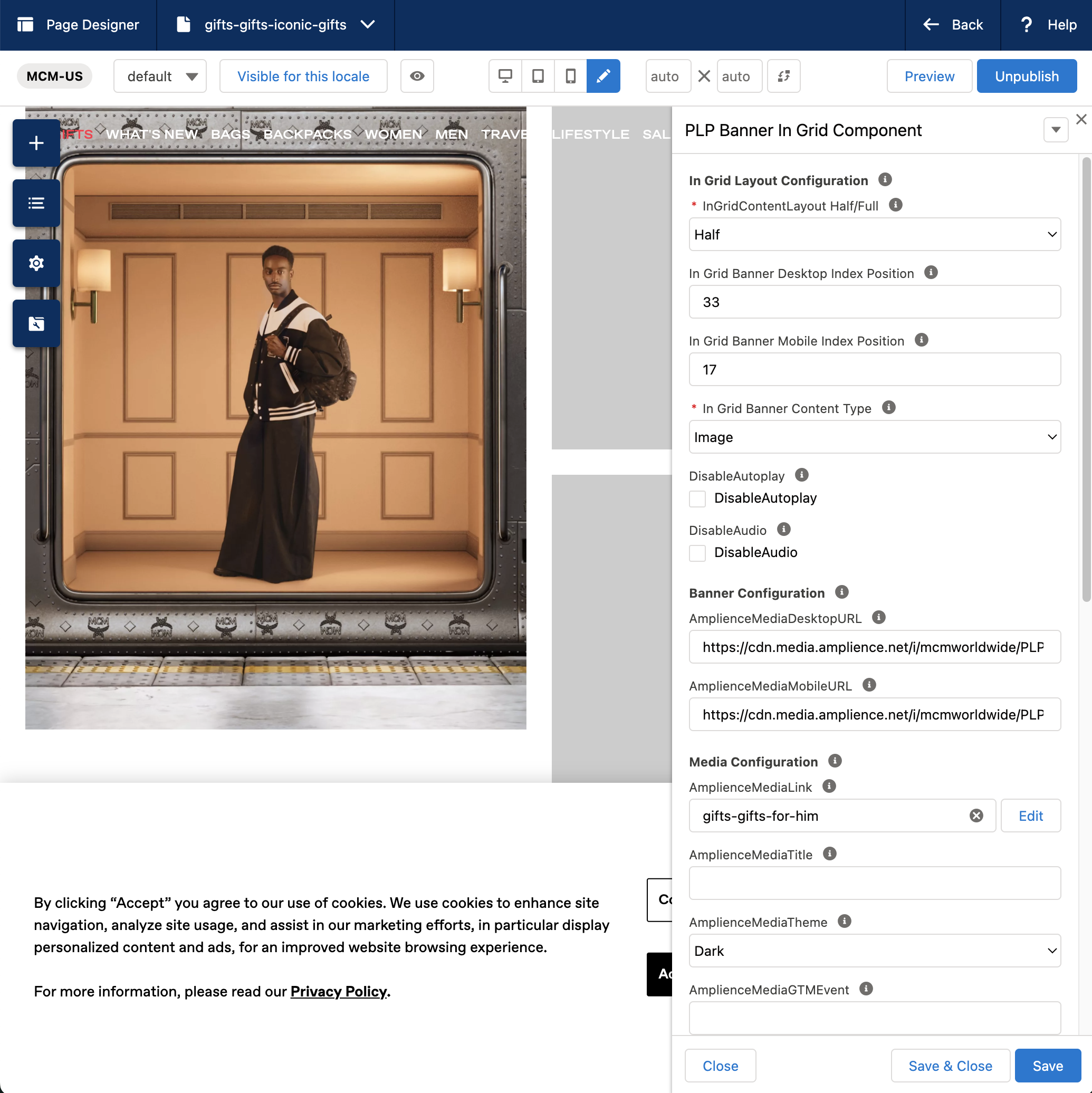
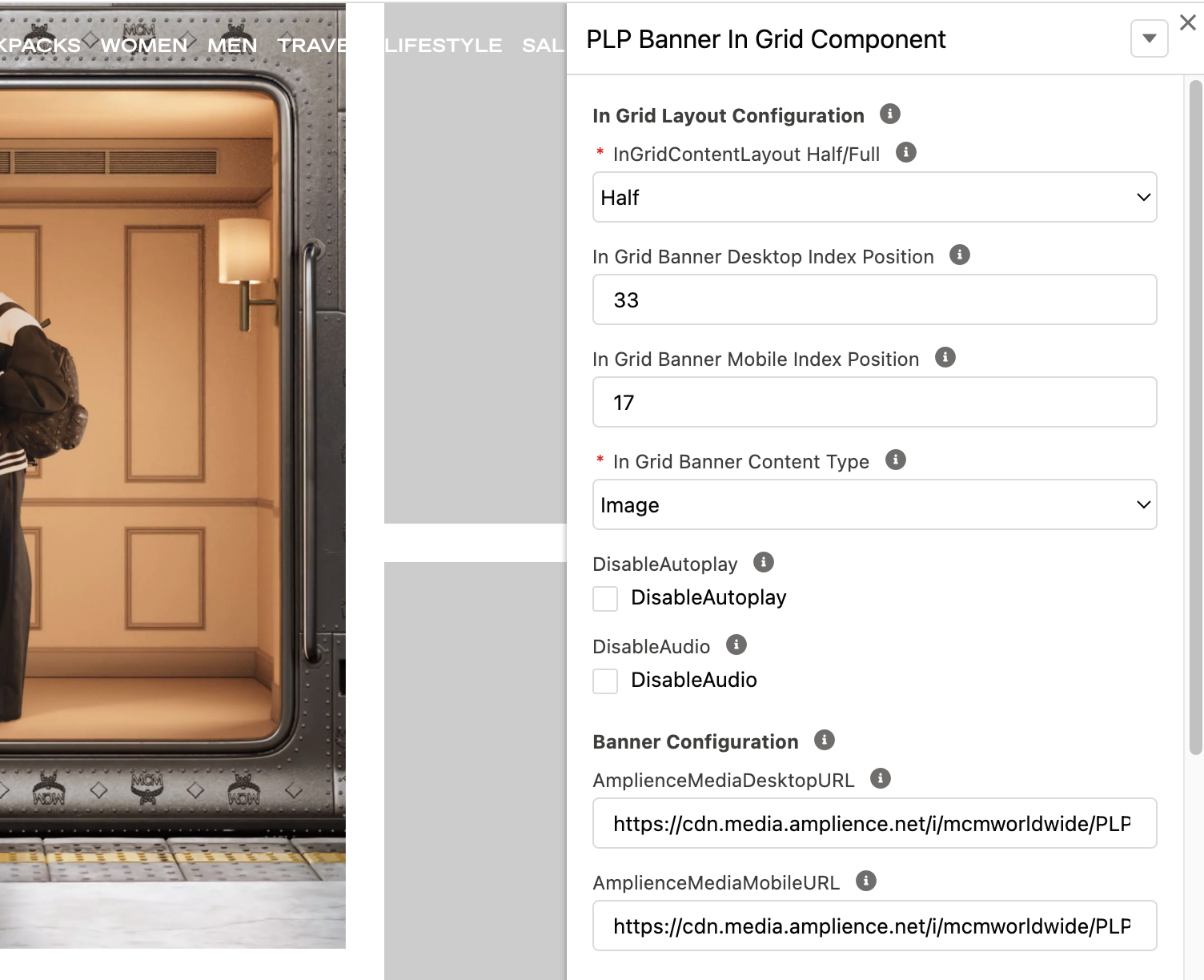
This setup not only made campaign launches faster and more efficient but also contributed to a 6.25% → 1.1% drop in bounce rate, driving greater consistency across 40 global markets.
Ultimately, it empowered global teams to manage content independently while maintaining consistent UX and visual standards established by the design system.
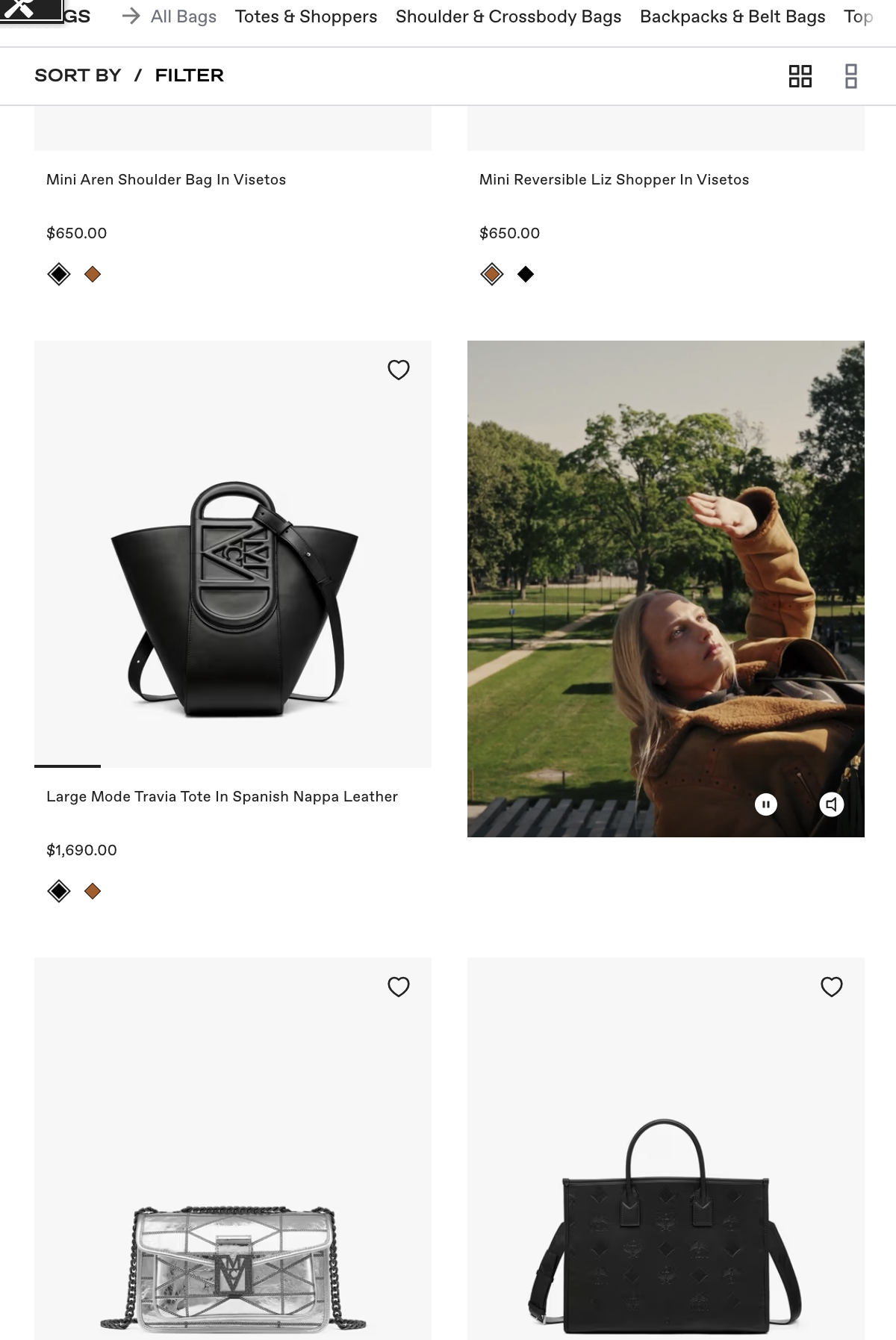

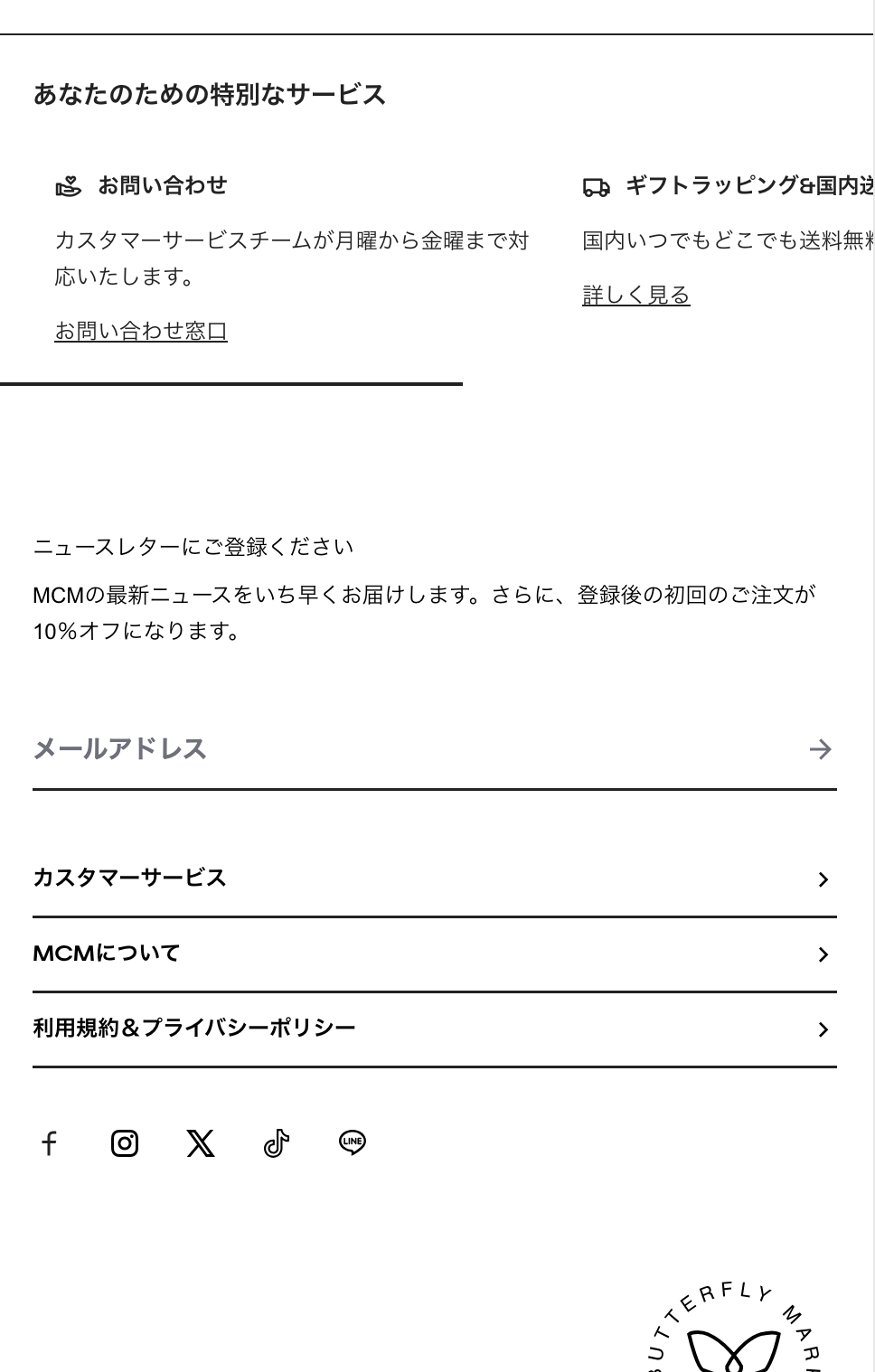

✅ Building MCM’s First Design System
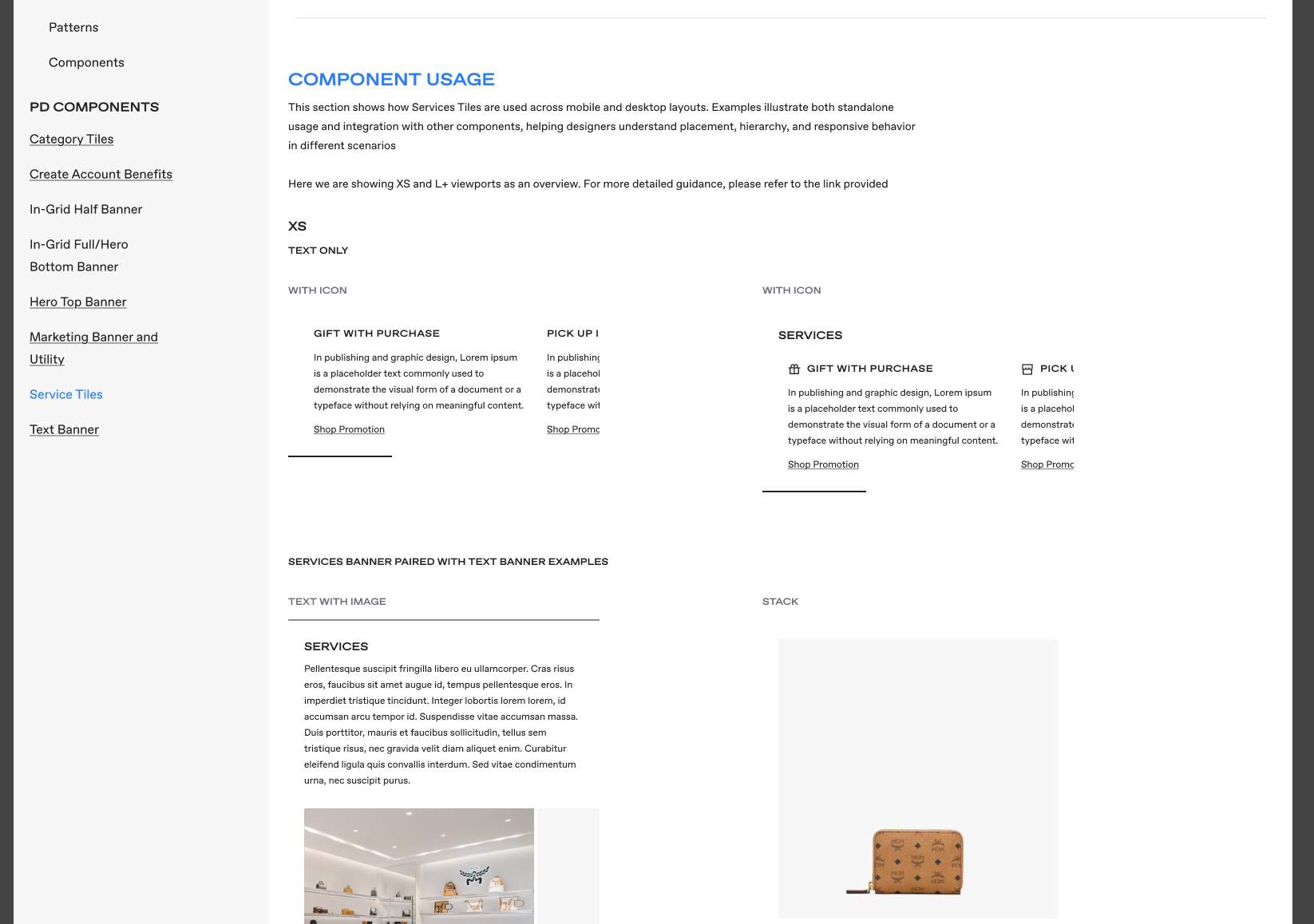
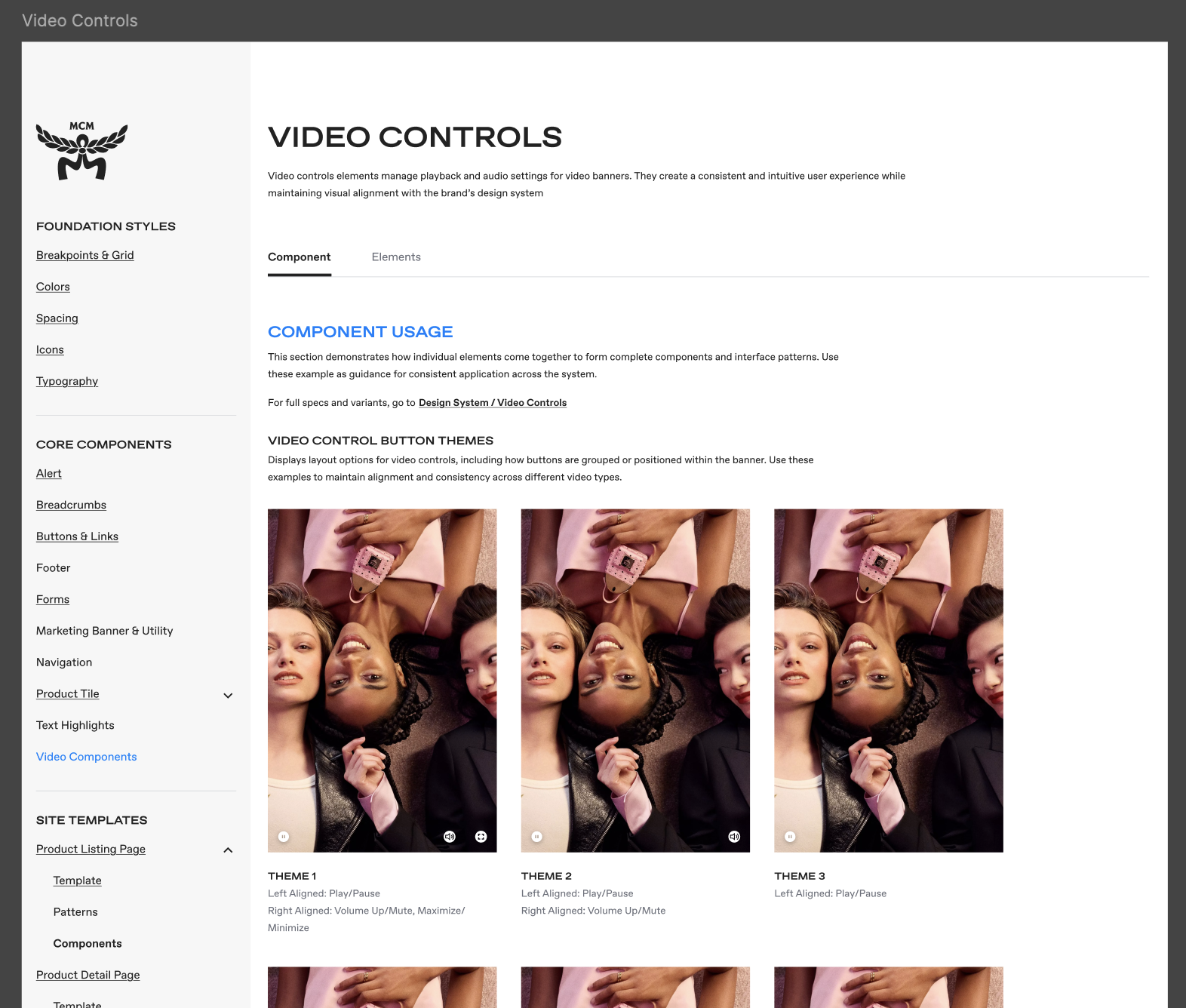
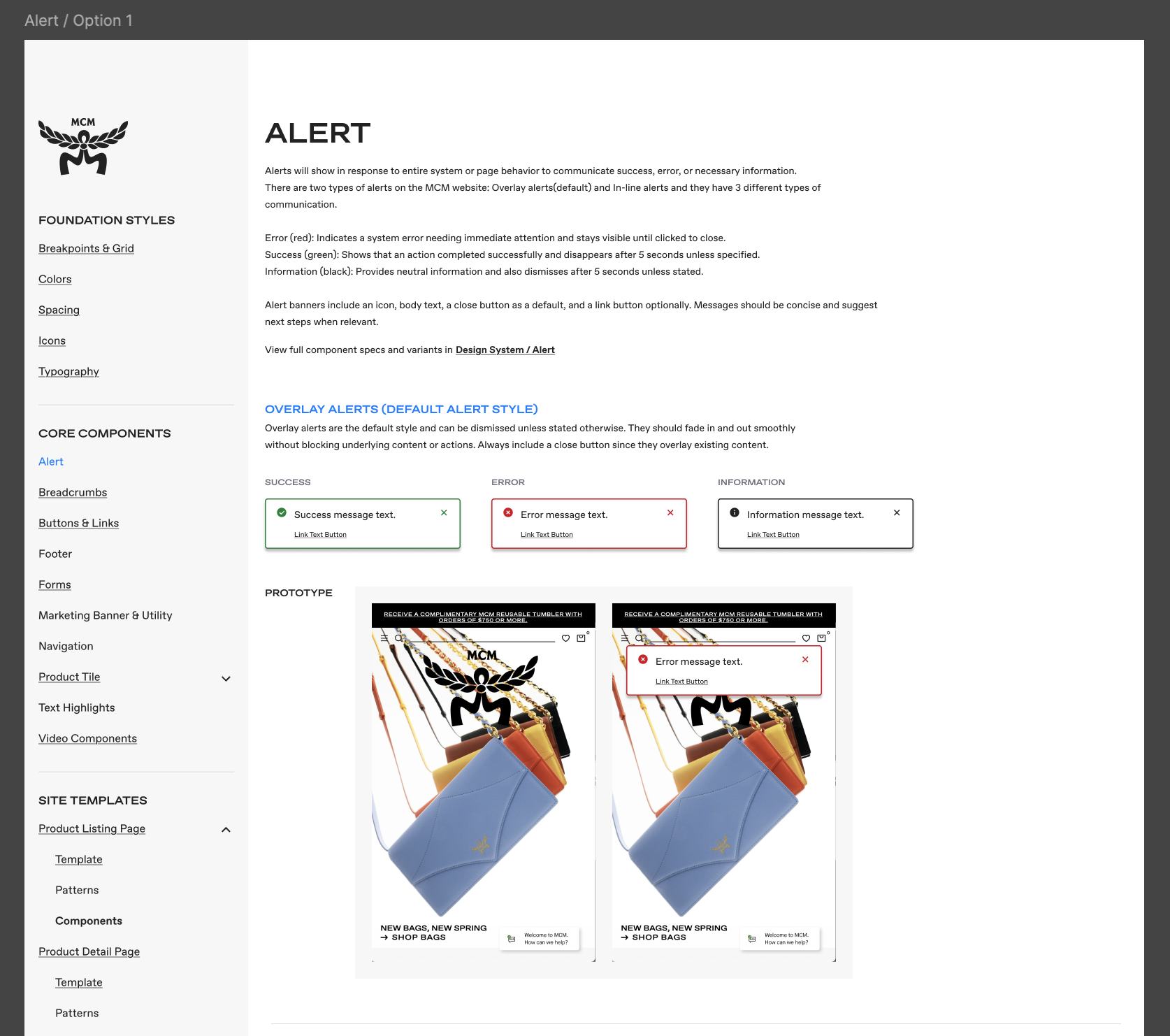
Building MCM’s first global design system was a pivotal step in transforming how the brand delivered digital experiences across 40 regional e-commerce sites.
Instead of scattered components, the system brought together templates and UX patterns that unified the site structures, interaction behavior, and accessibility standards. Aligning the site with this system elevated the overall user experience, making it more premium and cohesive across markets. I also created a static design system library and UX behavior guide that teams reference when designing, developing, or managing content globally.
More details about this work can be found in another page here.
View the Design System Project in Depth
✅ Optimizing Workflow and Collaboration
Beyond design work, the re-design was a long-term project that required working with teams across time zones and adapting to frequent stakeholder changes. These shifts often led to rework, overlapping decisions, and timeline delays.
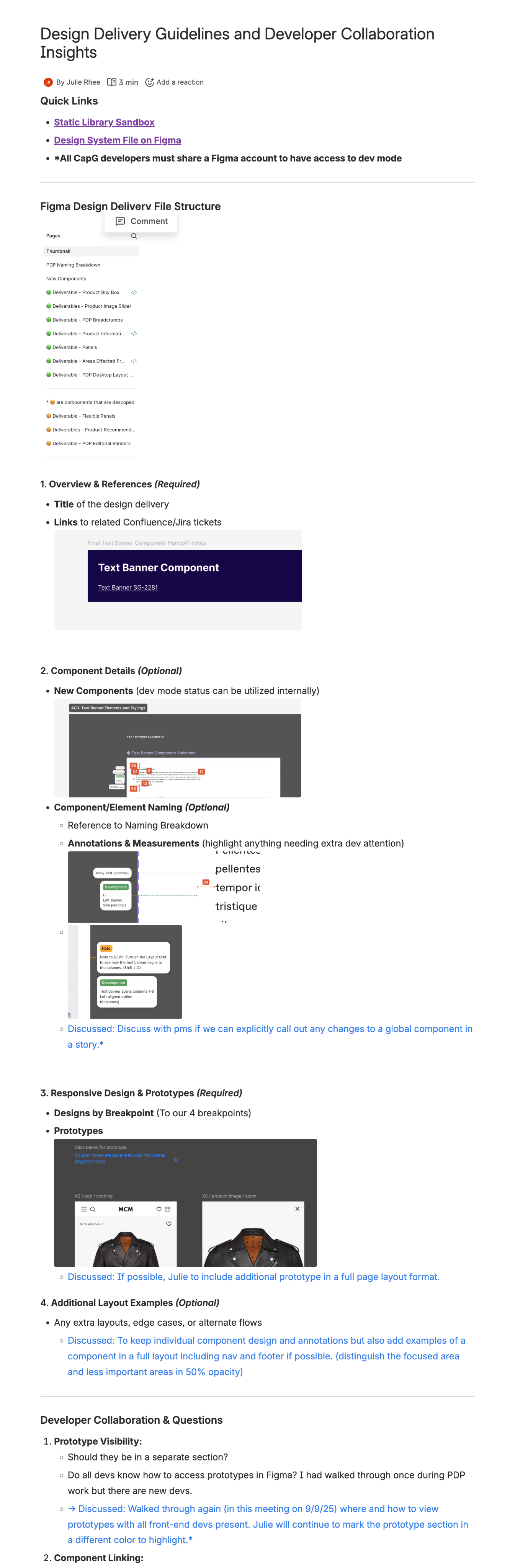
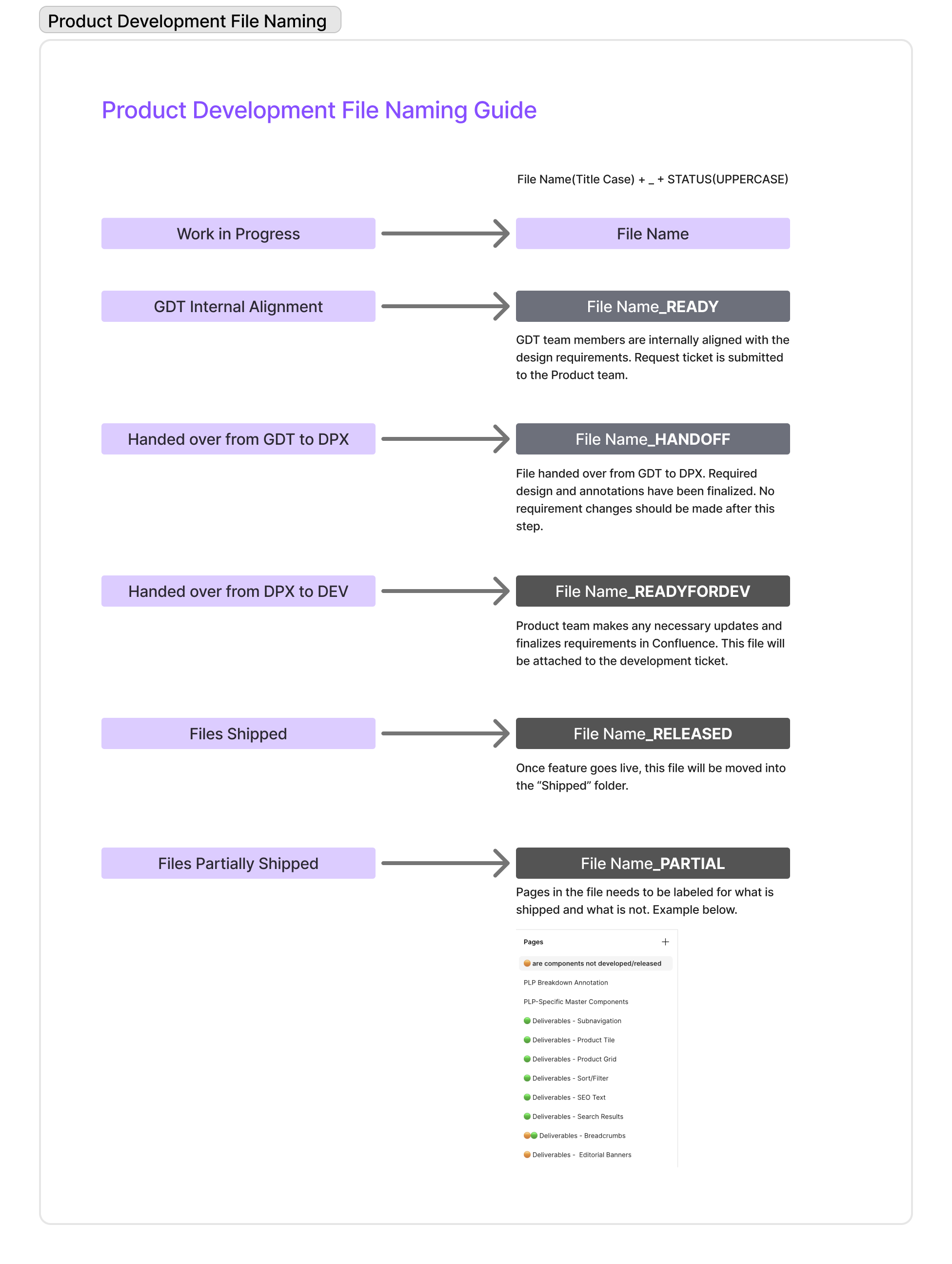
To improve collaboration and speed up delivery, I developed and established a workflow between business, product, and development that connected strategy, design, and execution.
This included building a prioritization framework to balance user needs with business goals, running cross-team workshops for alignment, and creating a handoff system to track updates and reduce back-and-forth with engineers.
Post build, I also led QA sessions and monitored launches to ensure the design quality. After implementing these changes, it made delivery faster, collaboration smoother, and reduced engineer costs by $2K/month.

✨ Recap and Reflection
In the course of 4 years and on, the re-design project taught me how deeply connected design systems, workflows, and collaboration are in delivering consistent user experiences at scale. Establishing scalable foundations like the design system and Page Designer library was not just about efficiency but this changed how global teams could create faster with fewer dependencies and eventually meet business goals.
Moving forward, I am hoping to run usability sessions with regional content managers to further refine how they interact with the components day-to-day. I see this as the next step toward empathizing with our internal users while continuing to evolve the experience for customers.
✨ Page Designer (Salesforce page builder) integration improved publishing speed and reduced development costs by around $2,000 monthly.
✨ US site homepage bounce rates dropped from 6.25% → 1.1%.
✨ Structured handoff ecosystem and cross team workshops reduced numerous hours of back-and-forth effort with external engineers.
Other Featured Projects
Back to Homepage
View Resume

Scaling Design Through Systems and Collaboration

From Figma to Code: A Designer’s AI-Assisted Journey

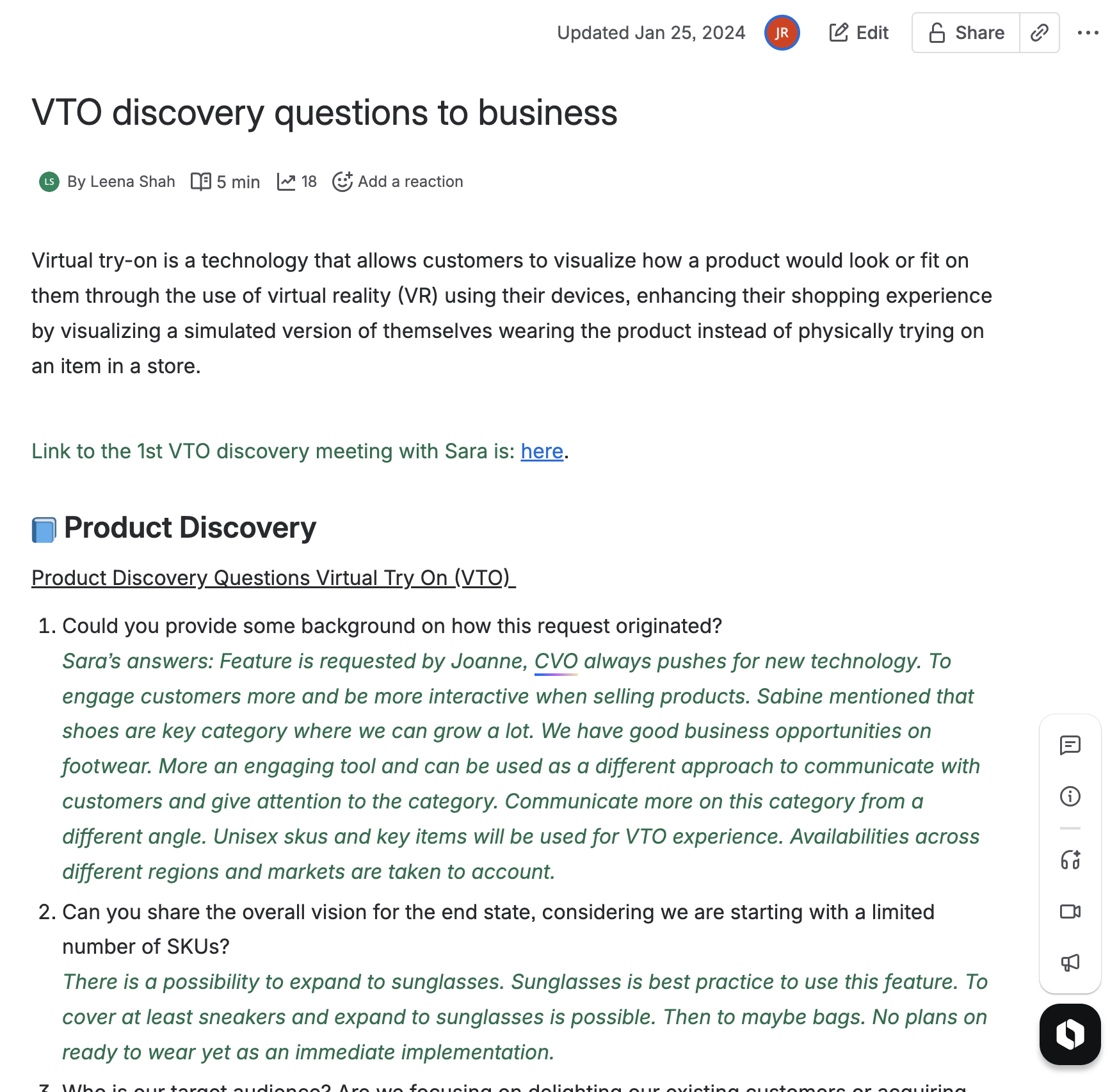
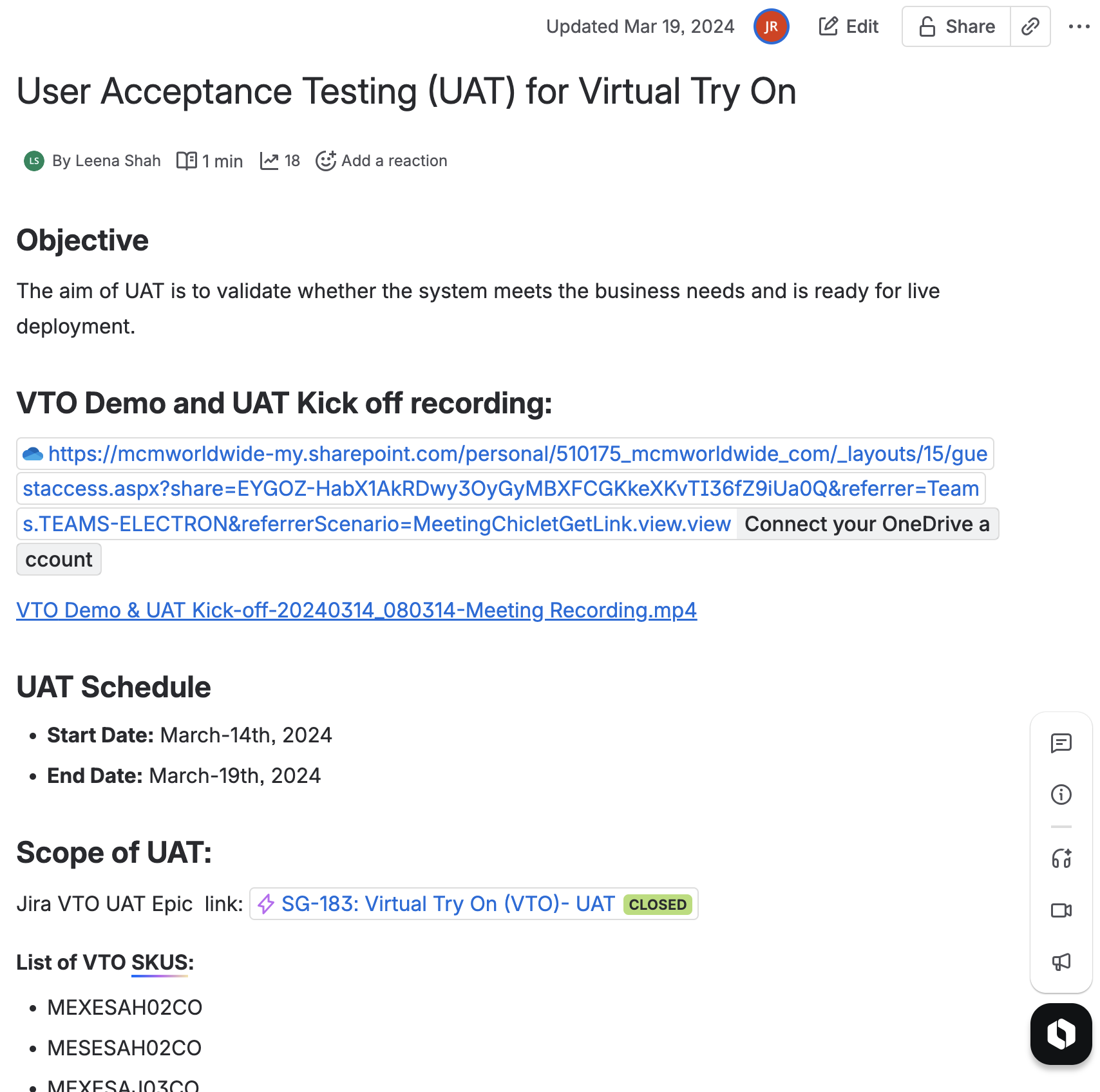
Bringing Products to Life with Virtual Try-On
My Role
UX Design
Design Systems
Product Managing
Front-End Dev ManagingQA
Team Members
4 Product Managers
1 Senior UX Designer
External Engineering & QA
Tools Used
FigmaConfluence, Jira
Timeline
4 years and on-going
Challenges
🚩 Fragmented user experienceInconsistent templates and UI patterns across 40+ localized sites created usability gaps and weakened MCM’s global brand presence.
🚩 Scalability and performance challengesHeavy custom code and slowed performance and made new feature rollouts and innovation difficultto execute.
🚩 Operational inefficienciesThe lack of systemized design-to-development process led to inconsistent builds, prolonged QA cycles, and repeated onboarding efforts.
Approach & Execution
✅ Scaling Page Builder Automation with Salesforce Page Designer
In collaboration with product managers and business team, we introduced and expanded Salesforce Page Designer, a drag-and-drop page-building tool within Salesforce Commerce Cloud.
I translated design into a scalable architecture, partnering with engineers to define structure and reusable patterns. I documented UX requirements, validated builds, and performed QA to support a library of components for faster, consistent localized campaigns.By gathering feedback from global content managers and from internal QA sessions, I was able to identify usability issues and friction points and prioritize iterations.


This Page Designer interface example highlights the technical and business logic behind each component.
I collaborated with developers to define configurable fields like layout, and media settings, enabling teams to build pages that met UX standards and campaign goals without extra development hours.
During this collaboration, I made sure to include feedback from content managers so components felt intuitive and worked seamlessly in their daily publishing workflows.
This setup not only made campaign launches faster and more efficient but also contributed to a 6.25% → 1.1% drop in bounce rate, driving greater consistency across 40 global markets.
Ultimately, it empowered global teams to manage content independently while maintaining consistent UX and visual standards established by the design system.

✅ Building MCM’s First Design System
Building MCM’s first global design system was a pivotal step in transforming how the brand delivered digital experiences across 40 regional e-commerce sites.
Instead of scattered components, the system brought together templates and UX patterns that unified the site structures, interaction behavior, and accessibility standards. Aligning the site with this system elevated the overall user experience, making it more premium and cohesive across markets. I also created a static design system library and UX behavior guide that teams reference when designing, developing, or managing content globally.
More details about this work can be found in another page here.
View the Design System Project in Depth
✅ Optimizing Workflow and Collaboration
Beyond design work, the re-design was a long-term project that required working with teams across time zones and adapting to frequent stakeholder changes. These shifts often led to rework, overlapping decisions, and timeline delays.
To improve collaboration and speed up delivery, I developed and established a workflow between business, product, and development that connected strategy, design, and execution.
This included building a prioritization framework to balance user needs with business goals, running cross-team workshops for alignment, and creating a handoff system to track updates and reduce back-and-forth with engineers.
Post build, I also led QA sessions and monitored launches to ensure the design quality. After implementing these changes, it made delivery faster, collaboration smoother, and reduced engineer costs by $2K/month.
✨ Recap and Reflection
In the course of 4 years and on, the re-design project taught me how deeply connected design systems, workflows, and collaboration are in delivering consistent user experiences at scale. Establishing scalable foundations like the design system and Page Designer library was not just about efficiency but this changed how global teams could create faster with fewer dependencies and eventually meet business goals.
Moving forward, I am hoping to run usability sessions with regional content managers to further refine how they interact with the components day-to-day. I see this as the next step toward empathizing with our internal users while continuing to evolve the experience for customers.
✨ Page Designer (Salesforce page builder) integration improved publishing speed and reduced development costs by around $2,000 monthly.
✨ US site homepage bounce rates dropped from 6.25% → 1.1%.
✨ Structured handoff ecosystem and cross team workshops reduced numerous hours of back-and-forth effort with external engineers.
Other Featured Projects
Back to Homepage
View Resume
Scaling Design Through Systems and Collaboration
Call out a feature, benefit, or value that can stand on its own.
From Figma to Code: A Designer’s AI-Assisted Journey
Call out a feature, benefit, or value that can stand on its own.
Bringing Products to Life with Virtual Try-On
Call out a feature, benefit, or value that can stand on its own.